- The Profit Insider
- Posts
- Business Idea Week: A Simple Tofu Hack Is Disrupting The $4B Cat Litter Industry
Business Idea Week: A Simple Tofu Hack Is Disrupting The $4B Cat Litter Industry
🔥 The Next Big Pet Industry Gold Rush Is Here(And it's hiding in the most unexpected place: Your cat's litter box)

Priyabrata Goswami
November 15, 2024
Read time: 3 minutes 45 seconds
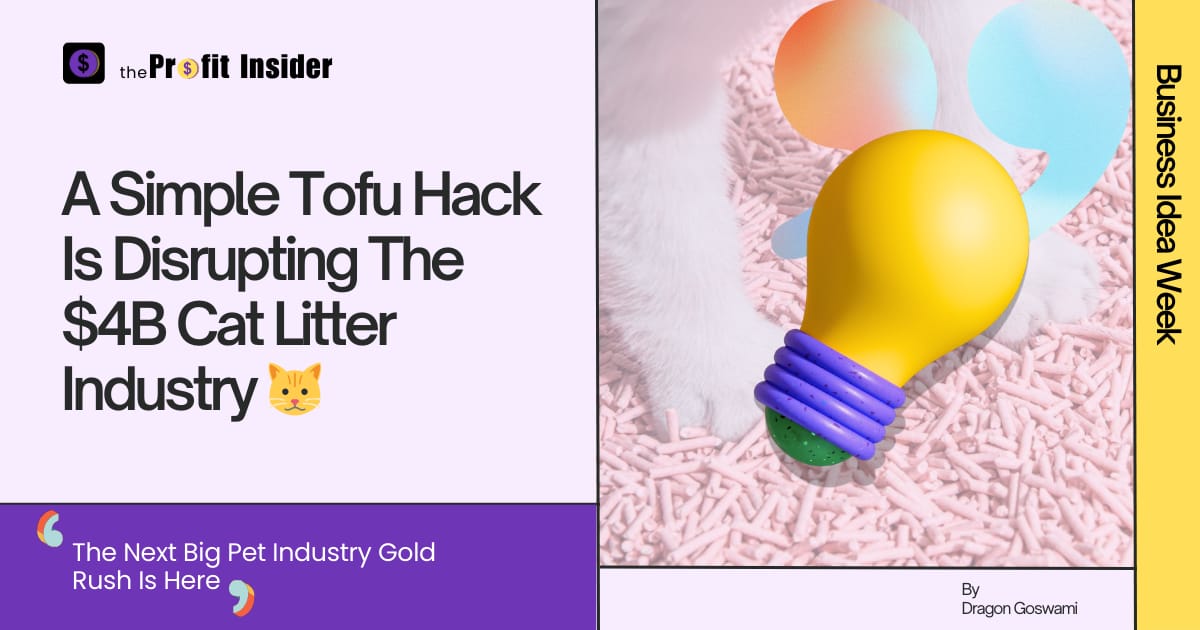
Okay, don't laugh, but today's business idea is about... cat poop 😾💩.
Well, technically it's about what goes in the cat litter box, but trust me - this is way cooler (and more profitable) than it sounds! I actually discovered this while helping my friend solve her cat's litterbox issues, and holy moly, the business opportunity here is wild.
So put down that spreadsheet you're pretending to work on 😉, and let's dive into this week's surprisingly awesome business idea!
💡 This Week's Exploding Idea: Tofu Cat Litter

Let's start with what makes this opportunity so interesting right now. The pet industry is absolutely booming, with eco-friendly products leading the charge. Traditional cat litter hasn't changed much in 50 years - it's still mostly clay, which isn't biodegradable and creates tons of dust. Enter tofu cat litter, and it's like bringing an iPhone to a market full of Nokia 3310s.
The Market Opportunity: The numbers here are pretty exciting. Search interest has jumped 30% in just the last year, with monthly searches hitting 4.6K. But here's the kicker - there's surprisingly low competition. The big brands like Purina haven't really jumped in yet, leaving the field wide open for entrepreneurs like us.
What Makes Tofu Litter Special: This isn't just another pet product - it's solving real problems that cat owners face daily. The litter is made from compressed soybean fibers, making it:
100% biodegradable and eco-friendly
Significantly better at clumping than clay
Actually flushable (a game-changer for apartment dwellers)
Nearly dust-free (goodbye, sneezing fits!)
Less likely to track through the house
Naturally odor-controlling without artificial fragrances
Now, let's dive into three solid ways to turn this trend into a profitable business:
💡 Business Model #1: EcoLitter Co. - The Premium Play
The Concept: Launch a high-end, eco-focused tofu cat litter brand that positions itself as the "Tesla of cat litter." This isn't just about selling litter - it's about selling a premium, environmentally conscious lifestyle to pet owners.
Target Market:
Primary: Urban professionals aged 25-40 with cats
Secondary: Eco-conscious pet owners willing to pay for premium products
Tertiary: Pet owners with small apartments who value convenience
Initial Investment: $5,000 - $8,000
Inventory: $3,000-5,000
Premium packaging design: $500-1,000
Website and branding: $1,000-1,500
Initial marketing: $500
Marketing Strategy:
Content Marketing
Educational blog posts about pet care and sustainability
Video content showing product benefits
Partnership with environmental organizations
Influencer Collaborations
Work with pet and eco-lifestyle influencers
Focus on micro-influencers (10K-50K followers) for better engagement
Create user-generated content campaigns
Retail Strategy
Start with direct-to-consumer through your website
Expand to premium pet stores
Consider subscription model for recurring revenue
Growth Potential:
Expand product line to include complementary eco-friendly pet products
Develop specialized formulas (multiple cat households, sensitive cats)
International expansion opportunities, especially in eco-conscious markets
Challenges to Watch For:
Higher production costs affecting margins
Need for consistent quality control
Managing shipping costs due to weight
Education required for customer adoption
💡 Business Model #2: Eco Paws - The Social Commerce Play
The Concept: Build a social-first brand that leverages TikTok's booming pet community and current seller incentives. The key here is creating viral-worthy content while selling directly through social platforms, particularly TikTok Shop where competition is still relatively low.
Target Market:
Primary: Gen Z and younger millennials (18-30)
Secondary: Social media-active pet owners
Tertiary: First-time cat owners looking for guidance
Initial Investment: $3,000 - $5,000
Initial inventory: $2,000-3,000
Video equipment/lighting: $500
Props and filming supplies: $300
Paid promotion budget: $200-1,000
Marketing Strategy:
TikTok Content Pillars
Before/after cleaning comparisons
"Day in the life" with cats using the litter
Eco-impact education videos
Customer testimonial reposts
Funny cat moments with product placement
Platform-Specific Approach
TikTok: Focus on entertaining, educational content
Instagram: Product highlights and lifestyle content
Pinterest: DIY cat care and eco-living tips
YouTube Shorts: Product demonstrations and reviews
Community Building
Create a branded hashtag challenge
Host live shopping events
Build a pet parent community through engagement
Regular Q&A sessions with veterinarians or pet experts
Growth Strategy:
Start with a single SKU to test market
Use TikTok's analytics to understand audience preferences
Scale advertising based on best-performing content
Expand to other social commerce platforms
Develop exclusive social media-only products
Common Challenges:
Need for consistent content creation
Managing inventory with viral spikes
Building trust in a crowded social space
Maintaining engagement during slow periods
💡 Business Model #3: Cat Litter EcoPro - The Hype Brand
The Concept: Create a Supreme-style brand with limited edition releases of colored and themed tofu litter. Each drop features unique colors or special editions, turning a mundane product into a collectible lifestyle item.
Target Market:
Primary: Trend-conscious pet owners (25-35)
Secondary: Design-focused home decorators
Tertiary: Luxury pet accessory buyers
Initial Investment: $10,000 - $15,000
Custom product development: $5,000-7,000
Brand design and packaging: $2,000-3,000
Website and tech setup: $1,500-2,000
Marketing and launch: $1,500-3,000
Marketing Strategy:
Drop Model
Monthly themed releases
Limited quantity per drop
Countdown timers and waitlists
Early access for VIP customers
Collaboration with artists and designers
Visual Marketing
High-end product photography
Lifestyle shots in modern homes
Instagram-worthy packaging
Behind-the-scenes of color development
User-generated content features
Exclusivity Tactics
Member-only previews
Collector's editions
Special packaging for first-time buyers
Loyalty program with early access benefits
Growth Possibilities:
Expand into pet lifestyle products
Create subscription-based collector's club
Collaborate with luxury pet brands
Pop-up events in trendy locations
Limited edition seasonal collections
Potential Challenges:
Higher production costs for custom colors
Maintaining exclusivity while scaling
Managing production timelines
Balancing hype with practical value
🎯 Key Takeaways for Success:
Market Entry Strategy
Start small with one business model
Test market with minimal inventory
Focus on building genuine customer feedback
Use data to guide expansion
Competitive Advantage
Focus on brand storytelling
Build strong community engagement
Maintain quality control
Create unique value propositions
Growth Timeline Month 1-2: Market Testing
Launch minimal viable product
Gather customer feedback
Test marketing channels
Build initial audience
Month 3-4: Optimization
Refine product based on feedback
Scale successful marketing channels
Build email list
Establish reorder systems
Month 5-6: Expansion
Introduce new products/variants
Expand marketing channels
Consider retail partnerships
Build brand ambassadorship program
Final Thoughts:
The tofu cat litter market is at that perfect sweet spot - growing demand, low competition, and lots of room for innovation. Whether you choose the premium route, social commerce path, or hype brand approach, the key is moving quickly while the market is still developing.
This Week’s Meme 😂:
