- The Profit Insider
- Posts
- Strategy Week: 19 Marketing Channels That Actually Matters
Strategy Week: 19 Marketing Channels That Actually Matters
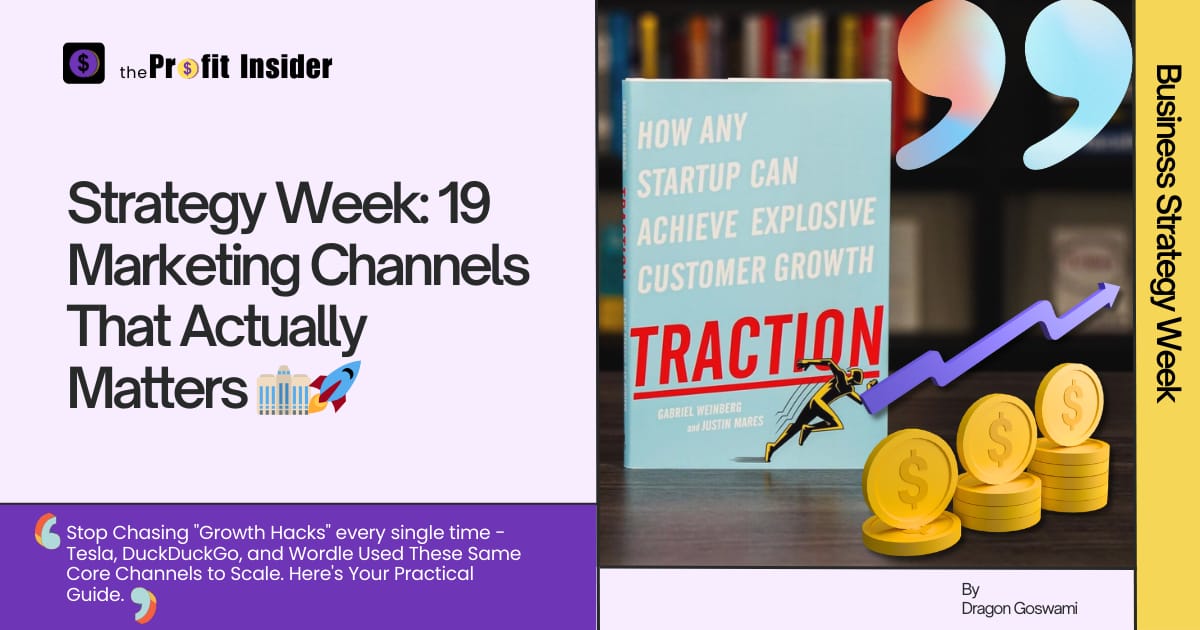
Stop Chasing "Growth Hacks" every single time - Tesla, DuckDuckGo, and Wordle Used These Same Core Channels to Scale. Here's Your Practical Guide.

Priyabrata Goswami
December 27, 2024
Imagine this: you’ve built something amazing—a product, a service, a platform. But it’s like hosting the world’s best party, and no one knows where the door is. Frustrating, right?
That’s where traction channels come in. These are the tools and strategies to get people lining up at your door, curious and ready to engage. But here’s the kicker: there are 19 of them, and picking the right ones can feel like a game of darts in the dark.
Don’t worry, though—I’ve got your back! In this week’s issue, we’re diving deep into these channels, inspired by Gabriel Weinberg’s Traction. But this isn’t just theory. You’ll get real-world examples, actionable insights, and strategies to help you pick the right channels for your business.
Let’s get started!
What it is: Your customers bring in more customers. Think of Wordle’s emoji-sharing feature—simple, addictive, and shareable.
How to implement:
Add shareable features to your product.
Incentivize referrals with discounts or rewards.
💡 Pro Tip: Track your “viral coefficient” to see how many new users one customer brings. Aim for a number above 1.
2. Public Relations (PR)
What it is: Getting media coverage through stories. Tesla’s zero-advertising strategy relies heavily on PR buzz.
How to implement:
Pitch unique stories to journalists.
Build relationships with reporters in your niche.
💡 Pro Tip: PR is hard to control, but the right story can catapult your brand into the spotlight.
3. Unconventional PR
What it is: Stunts that grab attention. Remember when Red Bull sponsored a man jumping from the stratosphere?
How to implement:
Think outside the box. What’s something bold that aligns with your brand?
Viral videos and quirky campaigns can work wonders.
4. Search Engine Marketing (SEM)
What it is: Paid ads on search engines like Google. These target users with high purchase intent.
How to implement:
Use keyword research tools to find high-converting terms.
Test different ad copies to improve click-through rates (CTR).
💡 Pro Tip: SEM is expensive, but when done right, it’s a conversion machine.
What it is: Ads on platforms like Facebook, Instagram, and TikTok. These target users based on interests.
How to implement:
Start with small budgets and test different creatives.
Use retargeting to re-engage people who visited your site.
💡 Pro Tip: Pair ads with influencer collaborations for a one-two punch.
6. Email Marketing
What it is: Connecting with your audience through newsletters and campaigns.
How to implement:
Offer value upfront (e.g., a free guide) to grow your list.
Personalize emails based on user behavior.
💡 Pro Tip: The best emails are conversational, valuable, and to the point.
7. SEO (Search Engine Optimization)
What it is: Ranking organically on search engines. Zapier dominates here with guides for every possible app integration.
How to implement:
Create in-depth, helpful content targeting specific keywords.
Optimize your site for speed and mobile-friendliness.
💡 Pro Tip: SEO takes time, but the long-term rewards are worth it.
8. Content Marketing
What it is: Educating and engaging your audience through blogs, videos, and more.
How to implement:
Share actionable insights your audience can’t ignore.
Repurpose content across platforms to maximize reach.
💡 Pro Tip: Solve real problems with your content to build trust.
9. Affiliate Marketing
What it is: Let others promote your product for a commission.
How to implement:
Create an affiliate program with clear incentives.
Provide affiliates with marketing materials to make promotion easier.
💡 Pro Tip: Affiliates can be your secret weapon for scaling fast.
10. Community Building
What it is: Turning your customers into a tribe. Think Harley-Davidson’s loyal fanbase.
How to implement:
Host events or online meetups.
Engage with your audience on social media.
💡 Pro Tip: A strong community creates brand advocates who market for you.
11. Existing Platforms
What it is: Leveraging platforms like Amazon, App Store, or YouTube to reach your audience.
How to implement:
Sell on established marketplaces like Etsy or eBay.
Build a presence on platforms where your audience already spends time.
💡 Pro Tip: Optimize your profile and listings for search within these platforms.
12. Trade Shows
What it is: Events where businesses showcase their products to a targeted audience.
How to implement:
Attend industry-specific events to network and showcase your product.
Invest in an eye-catching booth or demo.
💡 Pro Tip: Focus on collecting leads and following up after the event.
13. Offline Ads
What it is: Billboards, radio spots, or flyers—traditional advertising methods.
How to implement:
Choose locations or media channels where your audience hangs out.
Use clear, bold messaging to grab attention.
💡 Pro Tip: Pair offline ads with digital campaigns to track effectiveness.
14. Search Engine Optimization for Apps (ASO)
What it is: Optimizing your app’s visibility in app stores.
How to implement:
Use keywords in your app title and description.
Encourage reviews and ratings to improve rankings.
💡 Pro Tip: Regular updates and engaging visuals can boost downloads.
15. Engineering as Marketing
What it is: Creating free tools or resources that draw attention to your brand. HubSpot’s free website grader is a classic example.
How to implement:
Build calculators, templates, or widgets that solve a specific problem.
Promote them through your website and social media.
💡 Pro Tip: Make these tools shareable to amplify reach.
16. Business Development (BD)
What it is: Forming partnerships with other businesses to grow together. Think Spotify’s partnership with Uber.
How to implement:
Identify businesses that share your audience but aren’t competitors.
Propose win-win collaborations, like cross-promotions or bundled offers.
💡 Pro Tip: Start with smaller partnerships and scale as you see results.
17. Sales
What it is: Directly reaching out to customers to close deals.
How to implement:
Build a sales team focused on outbound calls or emails.
Use tools like CRMs to track and manage leads effectively.
💡 Pro Tip: Personalize your approach to make prospects feel valued.
18. Offline Events
What it is: Hosting workshops, conferences, or meetups to engage your audience.
How to implement:
Organize events that align with your brand’s mission.
Use these opportunities to educate and network.
💡 Pro Tip: Offer exclusive discounts or perks to attendees to drive conversions.
19. Speaking Engagements
What it is: Sharing your expertise on stage to establish authority.
How to implement:
Apply to speak at industry conferences or webinars.
Share actionable advice that positions you as a thought leader.
💡 Pro Tip: Record and repurpose your talks for online content.
Making the Right Choice
With all 19 channels laid out, the question is: which ones should you focus on?
Here’s a quick process to find your answer:
Brainstorm: List out channels that resonate with your audience.
Test: Run small experiments on 2-3 channels.
Analyze: Double down on what works and refine your approach.
Final Thoughts: The Road to Traction
Achieving traction isn’t just about picking a channel and hoping for the best. It’s about understanding your audience, testing what works, and iterating based on results. The 19 marketing channels we discussed aren’t just a list—they’re a roadmap for growth.
Start by narrowing down the channels that best fit your business model and audience. Are you targeting tech-savvy millennials? Try social media ads or influencer marketing. Want to reach corporate clients? Focus on business development or trade shows.
Here’s a step-by-step approach to get started:
Pick 2–3 Channels to Test
Don’t spread yourself too thin. Choose channels that align with your goals. For example, if you’re launching a new app, consider app store optimization and content marketing.Run Small Experiments
Allocate a modest budget and test campaigns. For example, run a $100 ad on Instagram or host a free webinar. Measure engagement, conversions, and ROI.Analyze Results
Did you acquire customers at a sustainable cost? Which channel brought the most engagement? Use data to identify what works and what doesn’t.Double Down
Once you find a winning channel, invest more time and resources into it. Optimize your campaigns and scale up gradually.Keep Testing
The marketing landscape changes constantly. What works today might not work tomorrow. Keep experimenting with new channels to stay ahead of the curve.
As you already know, success isn’t about doing everything—it’s about doing the right things well. The beauty of these channels is their versatility. You can adapt them to your brand, audience, and goals.
So, where will you start? Reply to this email and let me know—I’d love to hear about your experiments and successes. And if you hit a roadblock, I’m here to brainstorm with you.P
P.S. I am thinking about doing deep dives for every marketing channel mentioned above. Reply to me if you want deep dives on the strategies.
Meme Of The Week: